


Summary Overview
While itching could be possible, it is not typical for melanoma to itch. According to some medical studies, it suggests that itching typically occurs in a minority of melanoma cases which often lead to progression. Most of the itchy skin cases are benign. You can use the ABCDE symptoms as the primary guide on checking if. If the itching is very persistent, new, or it comes with changes, make sure to have it examined by a dermatologist immediately.
What You Will Learn
By the end of the article, you will learn about the following:
- You will understand why melanoma could possibly cause itching.
- You will learn to recognise the limitations of itch as a diagnostic sign. As well as why it should not be taken in isolation.
- You will learn about what other signs or changes to a mole are more reliable red flags.
- You will learn to know when and how to seek medical advice in the UK setting.
Everything You Need To Know About Melanoma
It is a type of skin cancer which comes from melanocytes. It is a specialised cell that is responsible for melanin production, the role of this is to give pigment to the skin. Compared with other common skin cancers like basal cell carcinoma or squamous cell carcinoma, they start in the building block cells of the skin while melanoma on the other hand, is considered way more dangerous due to its biological tendency to spread to other parts of the body if not detected early. However, based on studies, there are only about 1% to 4% of skin cancer cases, which is responsible for the vast majority of skin cancer-related deaths because of its aggressive nature.
If we are going to talk about melanoma in the UK, it is the fifth most common cancer. It has approximately 16,700 new cases diagnosed every year. In the early 1990s, it was doubled and a trend largely attributed to increasing UV exposure from holidays abroad and the historical use of sunbeds. One of the primary risk factors for people in the UK is having fair skin which burns easily, more than 100 counts of moles, or a history of severe & blistering sunburns during childhood. It could also be a factor of having a family history of the disease or being aged over 75 increases. However, this still remains one of the most common cancers among young adults aged 15 to 44.
Effective & professional doctor-led Melanoma at our central London clinic
Can Melanoma Actually Cause Itch?
While melanoma is commonly known and described as a painless spot, it could sometimes cause itching through several biological factors. As the Tumour grows, your body’s immune system starts to recognize the cancerous cells as foreign and slowly tries to adapt into it. It often then leads to triggering localized inflammation. This will then release pruritogens which are chemical messengers that irritate the sensory nerve endings in your skin. This is what causes the itching sensation. Also, as the melanoma cells infiltrate your dermis, it can possibly irritate its delicate nociceptors which sends the itch signals to your brain.
According to several researches and studies, it suggests that itching might be a more common symptom than previously thought. There is a notable study from the MD Anderson Cancer Center and findings published in ScienceDirect which says that there is roughly 28% to 36% of skin cancer patients who experience itchiness at the lesion site. While itching is more frequently related with non-melanoma skin cancers, there are clinical data which confirms that there is a significant minority linked to melanoma patients. This means that its intensity is typically localized.
It is essential to note that the absence of an itch does not accurately mean a mole is safe. The majority of melanoma are asymptomatic, it does not itch, bleed or hurt in the early stages. However, data on itching is still subjective and there are still ongoing studies according to the usual patient-reported outcome and sometimes it isn’t always recorded in clinical trials. Itching is typically common for benign reasons like dry skin, eczema, or healing scars. Therefore, while a new itch in an old mole might be a signal for a mole check-up, having an itching alone is a rare case for a diagnosis.
What Is The Difference Between Itchy Mole And Benign Itch
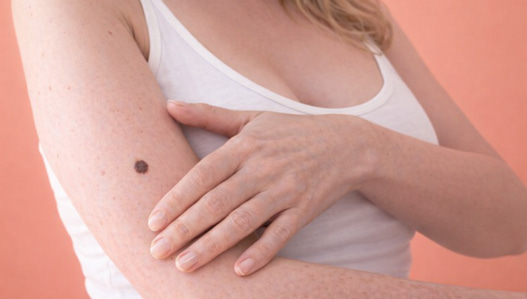
The majority of the dermatologists and organizations like Cancer Research UK and the NHS recommends using the ABCDE guideline to identify suspicious moles. While the first four letters focus on its visual traits, the E is where itching is mostly monitored. Here’s how to use this guide:
- Asymmetry: It is when one half of the mole does not match the other part.
- Border: It is where you’ll notice the edges are irregular, ragged, notched, or blurred.
- Colour: It is where you’ll notice the mole has different shades of brown, black, or even patches of red, white, or blue.
- Diameter: It is where you’ll notice the spot is typically larger than 6mm.
- Evolving: It is where you’ll notice the mole is changing in size, shape, or color. Most of the time it also has developed new symptoms like itching, crusting, or scabbing.
When identifying an itchy mole, it is significantly important to check if it is accompanied by other physical changes. You need to look for the physical changes like the following:
- Bleeding or Oozing: You might notice that the mole bleeds without being picked.
- Change in Pigmentation: You might notice there is a pigment spreading from the border of the mole into the surrounding skin.
- Texture Changes: The surface within the mole becomes rough, scaly, or might have a hard, lumpy feel.
- Inflammation: You’ll notice redness or swelling which can spread beyond the edge of the mole.
When identifying an itchy mole, it is important to know that it is typically caused by external irritation rather than cancer. It is most likely to be benign if:
- You have existing eczema or dermatitis flare-ups; most of the time, the mole itself isn’t the problem, but the skin around it is inflamed.
- The location of the mole constantly rubs with your clothing or jewelry around it.
- There is a recent bite near the mole which can cause the entire area to swell and itch intensely.
- You are using harsh soaps which can make moles feel tight and itchy.
- If you recently nicked the mole while you are shaving. This is likely to happen but it will heal over time.
When Do You Need To See A Doctor?
You might need to consult your doctor if itching becomes persistent and no longer tolerable. It typically lasts for more than two to three weeks. Using the ABCDE guidelines, you should be more particular in checking if the itching is accompanied by any visual red flags. Furthermore, for people with fair skin, has a history of sunbed use, or with a family history of skin cancer, if you notice any new itchy lesion that doesn’t look normal compared to other moles, you should be consult with your doctor immediately so you can detect early.
During the consultation, you will be undergoing a thorough physical examination of the lesion under bright, directed light. Your doctor will likely use a dermatoscope. It is a specialised handheld device which provides a high magnification and polarised light that works best in revealing pigment structures and vascular patterns within the skin. This is commonly used because these are not visible to the naked eye. When you have finally confirmed that there is a suspicious feature in your mole, the next step is undergoing an excisional biopsy. This is about removing the entire mole and a small margin of surrounding healthy skin which is performed under local anaesthetic. This is typically performed to be sent to the pathology lab for microscopic analysis.
The Question Is, Is Itching Common With Melanoma Skin Cancer Cause?
While melanoma is most commonly associated with the physical visual of the mole, itching is usually possible, but it is a less frequent symptom. According to some clinical data, there are roughly 30% of skin cancers which involve some level of itching or tingling. This only occurs because the growing tumour can significantly trigger localised inflammation or irritate the sensory nerve endings in the skin. However, it is important to remember that it is rarely the only symptom. You should still be guided using the “ABCDE” warning signs before worrying much about the itching alone.
It is very essential to remember that itching alone is rarely and not the only conclusive sign of cancer. Our skin is generally a sensitive organ that is why moles can itch for many benign reasons. It could sometimes be because of dermatitis, dry skin, rubbing from clothing, or even a healing insect bite. You should be alarmed if the itchy mole looks unusual compared with your other moles. It would always help to regularly monitor it using the ABCDE guide as well as having a regular skin check up with experienced and skilled dermatologists.
Reserve a melanoma appointment
One of our experts will be more than happy to answer any questions you have.
Book Appointment

Amanda Choi
★★★★★
Great service! Amazing doctor here! Thank you so much
27th February 2026

Adam Tigrine
★★★★★
5/5, great service! Rose and Mariana were very helpful!
27th February 2026

Abigail Darwish
★★★★★
The clinic was very lovely and the staff very helpful during my consultation for my skin. I will be coming again. Thank you!
28th February 2026