

Key Takeaways
- Most areola moles are not harmful or cancerous. But you still need to check any changes that can happen to them. If you notice anything like they grow bigger, their shapes become uneven, or their colour and texture are now different from how they looked previously, you need to go to your doctor immediately and have them checked.
- To help you spot the potential melanoma signs, use the ABCDE method – Asymmetry, Border, Colour, Diameter, Evolving.
- Consult your GP immediately if your mole bleeds, itches, ulcerates, grows quickly, appears during or after your pregnancy, or if you’re over 50.
- Check your moles regularly to help you detect issues as soon as possible.
What are Areola Moles?
Definition and Characteristics
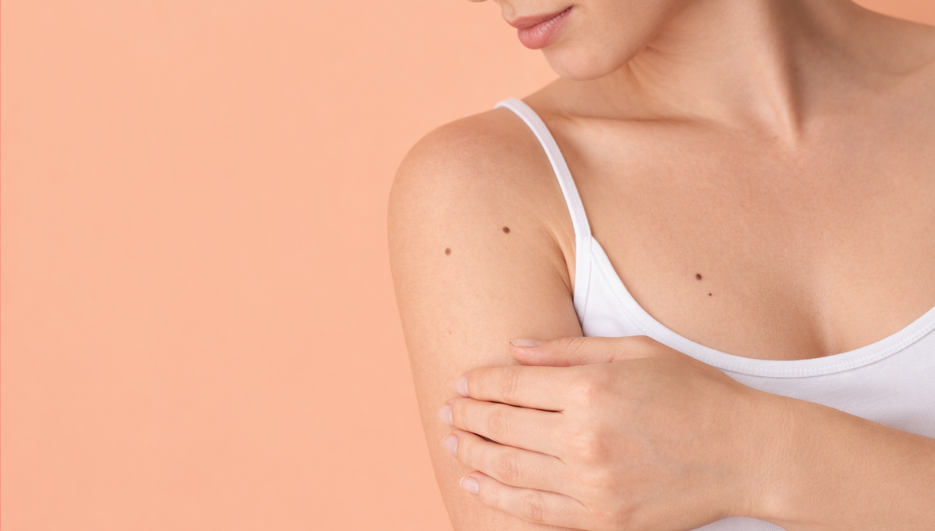
Areola moles are pigmented spots or growth that develop on your areola (the darker circular skin surrounding your nipple). Just like every moles on your body, they form when pigment-producing cells (melanocytes) cluster together.
They can vary in:
- Colour (black or light brown to dark brown)
- Shape (flat or slightly raised)
- Size (pinhead-small to several millimetres)
Some of them are present from birth, while others develop later in life.
Common Locations on the Body
Moles can develop anywhere on your body – including areas you may not see often, like:
- Under your breasts
- Around your nipple or areola
- Between folds of your skin
Because the areola is more sensitive and pigmented than surrounding skin, any small changes can be noticeable.
Types of Areola Moles
Benign Moles
Most of the moles you can see on your areola are non-cancerous. These include:
- Congenital Moles – present from your birth or early childhood
- Acquired Moles – develop during adolescence or adulthood
- Hormonal Moles – appear or darken during your pregnancy or breastfeeding
Characteristics:
- Remain stable over time
- Have smooth, even borders
- Don’t bleed or ulcerate
Malignant Moles
Although it rarely happens, melanoma can develop on your nipple area or areola. Because you don’t see them always, you may miss what really is happening to your moles.
Melanoma of the areola may look something like this:
- They look different from other moles in your body.
- They change rapidly.
- They cause symptoms such as bleeding or crusting.
If you notice any suspicious moles on your areola, you need to have it checked by your doctor because early detection can significantly improve outcomes.
Causes of Areola Moles
Genetic and Skin Type Factors
There are people that are more prone to develop moles in different areas of their body. It is most likely if you have a family history of moles or melanoma or if your skin is fair or you have lots of freckles. And also if you have many moles around your body.
So if you have all of these, it is not unusual that you develop moles on your areola.
Environmental Influences
Your moles can develop or change because of some factors (external and internal).
- You are exposed to UV (including sunbeds)
- Your hormonal shifting (puberty, pregnancy, or menopausal stage)affects your moles
- Your age is around 40-50 years old.
Your hormones change when you are pregnant and that’s one of the reasons why your moles are getting darker or may slightly grow. But, you should consult your doctor if your moles are changing rapidly.
When to Be Concerned
ABCDEs of Melanoma (for areola)
The ABCDE method is a simple way to assess your moles anywhere on your body, including sensitive areas:
- A – Asymmetry: One half looks different from the other.
- B – Border: Irregular, blurred. Or jagged edges
- C – Colour: Multiple colours or uneven shading
- D – Diameter: Larger than 6mm (about a pencil eraser)
- E – Evolving: Changes in size, shape, colour, or sensation
Evolving changes are often more important than size alone because areola skin is naturally darker.
Specific Warning Signs
You need to seek medical advice if your mole on or around your areola:
- Bleeds, oozes, or crusts
- Becomes itchy or painful
- Ulcerates or breaks down
- Grows quickly or changes texture
- Appears after you age 50
- Develops suddenly during or after your pregnancy
Trust your instincts – if you feel something is not right, you need to see your doctor right away.
Effective & professional doctor-led Areola Moles at our central London clinic
Health Consideration and Next Steps
Self Examination & When to Seek Help
One of the most effective ways to spot changes in your moles at the earliest time is monthly self-checks. Use a mirror in good lighting and look for:
- New moles that develop on your areola
- Any changes compared to the previous month
- Differences between the left and right side of your areolas
Book an appointment with your GP if you notice any concerning features. If needed, your doctor will refer you to a dermatologist.
Professional Assessment & Possible Procedure
A specialist may recommend you to do the following:
- Dermoscopy: Your mole will be examined using a magnifying device.
- Mole mapping: Your doctor will take a picture of your moles (in high-resolution) and use it to monitor them over time.
- Biopsy: It will remove a small sample from your mole for testing.
- Mole removal: If your mole is suspicious or medically concerning.
In the UK:
- If your mole is suspected of being cancerous, the NHS will cover your assessment and removal.
- If you are looking for a faster consultation and results, as well as more convenient options to remove your moles, you can go to private clinics.
Preventive Tips & Aftercare
Sun Safety and Skin Monitoring
Avoid UV exposure even though your areola is often covered. Below are the simple habits you can take:
- Avoid sunbeds
- Wear supportive, breathable clothing.
- Always use SPF every time your skin is exposed to the sun or when you are sunbathing.
Regular Skin Checks and Mole Mapping Importance
If you have multiple moles in your body or you have a family history of melanoma, you need to get regular skin checks or mole mapping because:
- It can monitor your moles over time and may detect even small changes that’s happening in your skin.
- It reduces unnecessary biopsies.
- It can improve early detection.
Summary & Takeaways
Moles are more common to appear on your areola and they are most harmless – than many people realise. But because melanoma can still occur in these areas – though rarely – you should never ignore the changes that you will notice.
You need to know what’s normal for your body, check your skin regularly, and seek your doctor’s advice when something changes because it can give you peace of mind and can protect your long-term health.
Early action can save your life – and reassurance is always worth the appointment.
FAQs
- What exactly are areola moles?
Areola moles are pigmented skin growths that you can see on the darker skin surrounding your nipple. They are usually benign, caused by clustering of cells that produce pigments.
- Are areola moles dangerous? When should I be worried?
Most of them are not dangerous. But if your mole changes its appearance, starts bleeding or itching, grows faster than usual, or looks different from your other moles – you need to consult your doctor.
- How does the ABCDE method apply to moles on the areola?
It applies the same principle. But it is important to check its new symptoms and evolution because your areola is naturally pigmented.
- Can changes to moles during pregnancy be normal?
Yes, it’s normal because hormonal changes can darken or slightly enlarge your moles. But if there’s new or rapidly changing moles you should have it checked.
- What services are available in the UK if a mole needs removing?
You have 2 options in the UK. You can go to the NHS for assessment or medical concerns. And you can also go to private clinics for dermoscopy, biopsy, and removal.
- Are areola moles covered by the NHS?
If cancer is suspected, your assessment and removal will be covered by the NHS. It will not be funded if you want to remove your mole for cosmetic reasons.
- What is the typical private cost for mole removal in the UK?
The price of mole removal in private clinics depends on the result of your assessment, their location, and technique. In Harley Street Skin Clinic the price starts at £775 – £930.
Reserve an areola mole appointment
One of our experts will be more than happy to answer any questions you have.
Book Appointment

Annie Doble
★★★★★
Thank you to Rose! She was the best would recommend her any day!!
25th March 2026

Monika Sliskova
★★★★★
Great service
25th March 2026

Alex Longson
★★★★★
Dr Waites saw me early, listened and attended to my needs! In all a great experience.
28th March 2026