

Introduction
It’s common for every person to have skin tags. In fact, most of us can have at least one of them anywhere on our body at some point in our lives. They can appear out of nowhere, and it’s normal to feel concerned and uncomfortable with it. Some people are confused if it’s a mole, and some are asking if it’s harmful or needs to be treated.
If you want to know more about skin tags, you’re on the right page. Because this article will show you the true definition of skin tag, why they form into your skin, and how you’ll be able to distinguish them from other skin growths that you have.
What is Skin Tag?
If you see a small, soft skin growth that hangs from the surface of your skin, that’s a skin tag—the one with a thin stalk. Its medical name is acrochordon, and it’s non-cancerous.
They commonly appear on your skin. But even though you may feel uncomfortable having them, they are usually harmless. You may often see skin tags developing on your skin’s natural folds or where your skin rubs together. This may include your neck, underarms, groin, under your breasts, or eyelids. The good thing is that they are not contagious or infectious, and are not a type of skin cancer. It’s just an outward growth of your extra skin tissue.
How Skin Tag Forms
When your skin often rubs against your skin, jewellery, or clothing, there’s a big chance that skin tag will form. Some health conditions like diabetes, high blood sugar, high blood pressure, high cholesterol levels, as well as some extra fat on your waist can make you more at risk in developing skin tags.
Common Characteristics
So what do skin tags look like, and how can you differentiate them from other skin growths you have?
Check the below details to help you visualise the look of a skin tag:
- Colour:
- It may have a flesh colour
- It can be slightly darker than the natural colour of your skin
- It can be light brown for some people
- Size:
- You can have a size just as small as 1-2 millimetres
- In rare cases, they can grow for about several centimetres
- Shape & Texture:
- You will see it hanging from your skin with a thin stalk.
- It can be soft and flexible when you touch it
- It’s moving without leaving its base.
The good news is these tags are not considered as medical problems because it will not cause any type of cancer. You can leave normally when you have them. So it’s definitely just a cosmetic issue.
Effective & professional doctor-led Skin Tag at our central London clinic
Causes of Skin Tags
If you are wondering where your skin tags came from, well, the research is still continuing but there are several factors that have been linked in their development.
Friction/Skin Rubbing
This is the most common reason why you have some skin tags developing on your skin. When your skin has repeatedly rubbed against itself, or in your jewellery or clothing, it may cause the extra tissue to grow. This is why you will often see those tags in your folds and creases.
For example:
- You often wear tight collars that rubs to your neck
- Friction on your underarm
- Skin folds in your groin area
Age & Genetics
You will not commonly see skin tags in children. But it’s common to adults, especially those who are over 40. There’s also a big chance that you develop skin tags if it runs in your family. Like, if your parents have multiple of them.
Associated Factors
Your lifestyle and your health conditions are also factors that are linked to skin tags.
- Obesity: If you are overweight, you are more likely to develop skin tags. When friction is often created because your skin rubs against each other, the chance of forming skin tags is high.
- Insulin resistance: Skin tags can also be seen to those people with insulin resistance, just like those people with type 2 diabetes. But, if you only have a few skin tags, it doesn’t mean that you have diabetes.
- Hormonal Changes: If you are experiencing hormonal imbalance, like when you are pregnant, there’s a possibility of skin tag development.
As of today, researchers still don’t fully understand the exact reason why skin tags tend to develop. But the experts believe that it is because of your skin growth factor’s reaction to repeated rubbing or irritation with a combination of certain metabolic changes in your body.
Symptoms of Skin Tags
If you have skin tags, you don’t usually feel anything, or if there’s any symptoms it is usually minimal. It will not affect your daily life.
Typical Signs
- Painless: You may not feel any pain with skin tags unless they become irritated or injured.
- Soft: When you touch it, it feels smooth and a little rubbery.
- Non-itchy: You will not feel any itchiness or burning sensation, unlike other skin conditions.
- Slow growing: They don’t appear suddenly; they are just developing gradually.
Because of this, some people may not quickly notice that they have this thing. They will only realise it when they are shaving or applying their skincare products.
When Symptoms Occur
Usually, skin tags are not harmful. But there’s always a possibility that the symptoms may occur and you may only experience minimal of it.
The symptoms usually occur because of irritations:
- When your jewellery, like your necklace or earrings rubs against your skin.
- When there’s friction because of your tight clothing, like tight collars, bras, or waistbands.
- When you have accidentally cut your skin because of shaving or grooming.
- When there’s frequent rubbing in your folds, like your underarms or groin.
When these irritations happen, you may experience symptoms like:
- Redness around your skin tag.
- Tenderness or mild soreness
- There can be minor bleeding if your tag has been scratched or cut.
- Slightly swelling or inflammation.
This can only be temporary. Once there’s no more irritations, your skin tag may return to its normal appearance.
When to Seek Medical Advice
There’s a time that your skin tag can accidentally twist around its stalk (that’s the thin piece of tissue attaching from the base of your skin). When this happens, the blood supply to your tag will eventually stop. This will cause your skin tag to:
- Turn darker
- Become dry or shrivelled
- Falls off on its own sooner
This can be surprising, but it’s a harmless process. If you feel that your tags become painful, or they are repeatedly irritated, you have to consult your healthcare provider so they can examine them.
Those skin tags are not a medical concern but more of a cosmetic concern. And if you see them changing rapidly in size, colour, or shape, or if there’s bleeding or they become painful, don’t hesitate to seek medical advice to know exactly what is happening or if you have other conditions that need medical treatment.
Skin Tag vs. Mole
Some people are getting confused with the difference of their skin tags and moles. They keep on searching online to check its comparison.
Key Differences
To help you understand their difference, here’s a simple explanation of their characteristics:
- Skin Tags
- They hang on a thin stalk.
- They are soft and movable.
- They are common to see on your folds.
- They have a uniform colour.
- Moles
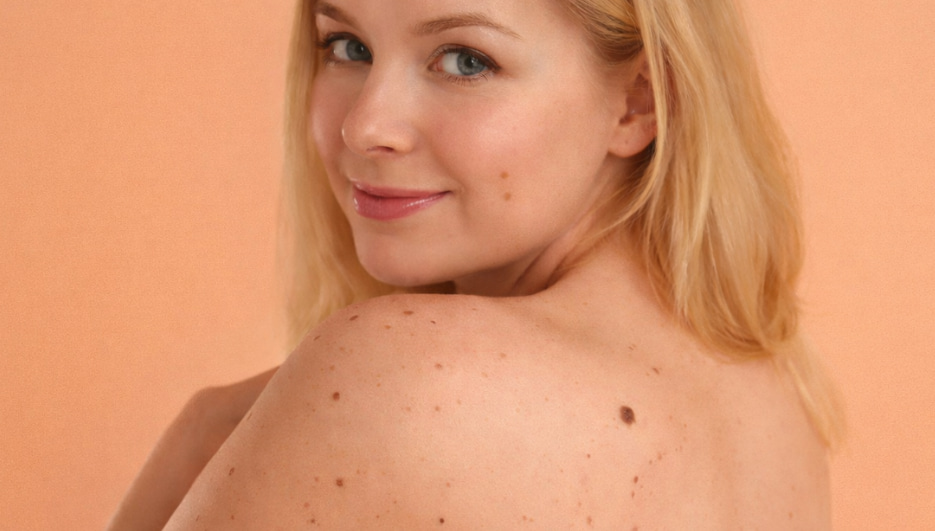
- Sometimes they are flat, some are raised.
- They have a round or oval shape.
- They can be seen anywhere in your body.
- They have different colours (brown, black, pink).
You should be more attentive to your moles because in some cases they can develop into skin cancer. Skin tags are not.
Similarities and Overlap
Although they are different conditions of your skin, they also share some similarities. These are:
- Usually, they are both benign.
- They can be small and flesh in colour.
- They usually appear during adulthood.
If you are not medically trained, it may be difficult for you to distinguish them, especially if you have smaller tags and moles.
Potential Complication
Skin Tag Infection
It’s unusual that your skin tag becomes infected. But it can still happen if you try to remove it on your own or if your skin has been broken because of repeated irritation. `
The signs you need to watch for:
- Increased redness
- Warmth
- Swelling
- Pus
- Ongoing pain
If you think that your skin tag is infected, don’t just treat it yourself. You need to seek your doctor’s advice.
Other concerns
These concerns are commonly experienced by many people:
- Cosmetic discomfort
- Self-consciousness
- Snagging on clothing
- Discomfort in jewellery
Don’t even try to remove it on your own because it may cause:
- Bleeding
- Scarring
- Darkened skin (hyperpigmentation)
Let your healthcare professional do the job.
Treatment Removal
Because your skin tags will not usually cause you harm, it is not medically needed to get a removal. But, if your tags cause you discomfort or stress, you may need to consider removing it and ask help from your doctor.
In the UK, skin tags may not be available in the NHS, especially if you just want it to be removed cosmetically. But if those tags caused you medical problems, that’s another thing and the NHS might accept it.
Skin tags can be removed with the following treatments:
- Cryotherapy (freezing): Your skin tags will be removed with the use of liquid nitrogen. Good if you have small to medium tags.
- Ligation: this process ties off your skin to remove the blood supply to your tags.
- Excision (cutting): Using a scissor or blade to remove your bigger tags.
- Radio frequency: It uses an electric current to burn your tags.
Read more: What to Expect Before You Book A Skin Tag Removal
FAQs
- Are skin tags dangerous?
No. The Skin tags that you have are usually harmless and non-cancerous. But if you see some unusual signs, your tags should be examined.
- Can skin tags go away on their own?
It’s not common but it’s possible to happen. When your skin tags twist or lose its blood supply, it may fall off naturally.
- Can I remove a skin tag at home?
It is not recommended to remove it on your own because it may cause infection or scarring.
- Do skin tags mean I have diabetes?
Not necessarily. Although having many skin tags is associated with insulin resistance, it doesn’t mean that you have diabetes if you see one or two tags in your body. If you think you have other symptoms of diabetes, you better consult your GP just to be sure.
Final Thoughts
If you know the real look of skin tags and how to differentiate them from other skin growths that you have, you can be at peace.
Skin tags are usually harmless. They are not cancerous, and you will also rarely feel discomfort. You only need it to remove medically if you experience pain or if it becomes irritated or infected. You also have the option to cosmetically remove them if you think you don’t look good having them.
Always consult your doctor and ask for guidance and recommendations.
Reserve a skin tag appointment
One of our experts will be more than happy to answer any questions you have.
Book Appointment

Joshua Presley
★★★★★
Great experience. Quick and effective.
17th March 2026

Rebecca Norfolk
★★★★★
Dr omar was perfect! He was very clear and informative, and the procedure was quick and pain free
17th March 2026

Enya
★★★★★
Very happy with my initial consultation with dr tee who was then able to treat me straight after
18th March 2026