

Introduction
Freckles are usually harmless. But if you have them, your skin can be more sensitive to the sun. That’s the reason why you have a slightly higher risk of having skin cancer.
Sometimes, a spot that looks like a freckle could actually be skin cancer, or a freckle might change in a way that needs a doctor’s attention.
Knowing how to tell the difference between normal freckles and warning signs can help you take care of your skin and get medical help early if needed.
Summary
Freckles are small, flat spots on your skin that can be light or dark brown. They occur because of sun exposure and genetics. Freckles themselves are not cancer, but people with many freckles, especially those with fair skin, may have a higher risk of skin cancer because their skin is more sensitive to the sun. You should see your dermatologist if your freckles appear suddenly or are new, become darker or larger, or have an uneven shape or colour. Also, if your freckles become itchy, bleed, or change their characteristics.
Using sun protection and getting your skin checked regularly is the best way to protect your skin.
Understanding Freckles
What are freckles?
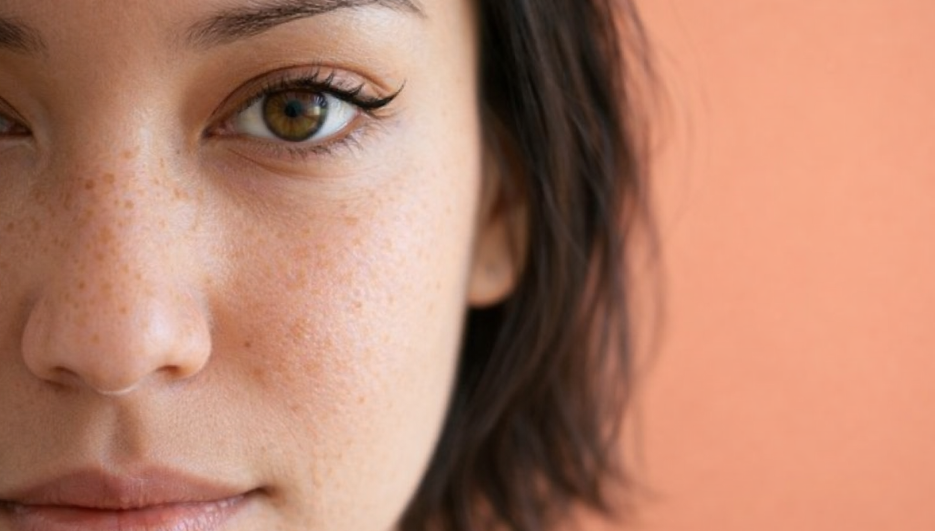
Freckles are small, flat spots that appear on your skin. You can usually see it on the areas exposed to the sun, such as on your face, shoulders, arms, and even on your upper chest. Medically, they are grouped in two main types:
- Ephelides: These are the classic freckles that usually appear in your childhood. You will often notice them become darker in summer and fade during winter.
- Solar lentigines: These are darker spots that last longer and don’t fade easily. They’re often called “sun spots” or “age spots” and are caused by long term exposure to the sun.
What causes freckles?
You may develop freckles when UV radiation from sunlight triggers your melanocytes (pigment-producing cells) to produce more melanin. Genetics can also play a role. Some people’s skin may respond more strongly to sun exposure than others.
These are the common contributing factors:
- You are repeatedly exposed to the sun.
- Sunburns during your childhood
- You have limited natural melanin production.
- Genetic traits affecting your pigmentation
Who tends to get freckles?
You are more likely to have freckles if:
- You have fair or light skin
- Your hair is red or light brown
- You have blue, green, or hazel eyes
- Your family have history of freckles
In the UK, freckles are very common because many people have fair skin, which makes them more sensitive to the sun. After long winters, strong summer sun can suddenly hit their skin, leading to more UV damage that makes their freckles appear.
The connection Between Freckles and Skin Cancer
Are freckles themselves dangerous?
No. Freckles themselves are not dangerous. They are benign pigmentation changes on your skin and do not turn into cancer.
But, if you have freckles, it means that your skin is more sensitive to sun exposure, which makes it easier for UV rays to cause damage and increase your overall risk of cancer.
Risk factors associated with freckles
Although freckles are not harmful, people who have many freckles on their skin often share risk factors for skin cancer. They all have:
- Fair or pale skin
- History of sunburns during their childhood
- Family history of melanoma
- Multiple moles alongside freckles
This means that freckles are not their problem, it’s their sensitivity to the sun.
Types of skin cancer relevant in the UK
Below are the main types of skin cancer:
- Melanoma: The most serious form.
- Basal cell carcinoma (BCC): Very common and usually slow growing.
- Squamous cell carcinoma (SCC): They can grow more aggressively.
Many people
In its early stages, melanoma is often mistaken as freckle or mole by many people.
When Can a Freckle Be Cancerous
This is where most people’s confusion happens. The question is not usually “can freckles be cancerous?” – it’s whether the thing on your skin that looks like a freckle might actually be skin cancer.
Effective & professional doctor-led Freckles at our central London clinic
Can a dark freckle be skin cancer?
If you have dark freckles, it’s usually harmless if it has:
- Even colour
- Smooth borders
- Long-term stability
But, if you notice that your freckles become too dark, develop multiple colours (black, blue, red), or look different from your other spots, you should have it checked.
Can a large freckle be cancerous?
Usually, freckles are small. But if you find them like this:
- Growing larger than 6mm
- Expanding over time
- Having uneven edges
It may not be a freckle at all. In some cases, a freckle that looks like a lesion and large in size could be a sign of melanoma or other skin condition that requires your healthcare professional’s assessment.
Can a new freckle be skin cancer?
Don’t be surprised if a new freckle appears on your skin because with sun exposure, it can appear at any age. But if you notice new pigmented spots in your adulthood, you need to consult your doctor – especially if they:
- Suddenly appear
- Grow quickly
- Look different from your existing freckles
Your new freckle is not automatically cancer, but you should have it monitored closely.
Identifying Changes to Freckles
The ABCDE rule
Your dermatologist is using the ABCDE rule to spot the warning signs. You can also use it to help you check and spot the concerning changes as early as possible.
- A – Asymmetry: One side doesn’t match the other.
- B – Border: Edges are irregular, blurred, or jagged.
- C – Colour: It has uneven shading and multiple colours.
- D – Diameter: Your spots are larger than 6 mm.
- E – Evolving: Changes their shape, size, colour, or characteristics.
Other Warning Signs
You need to seed medical advice if your freckles:
- Becomes itchy or painful
- Bleeds or crusts
- It feels raised now, even though it used to be flat.
- It looks irritated with an open sore.
The Ugly Duckling
This is one of your spots that looks different from all your other freckles or moles. Even if it doesn’t meet the ABCDE criteria. This one still needs your doctor’s assessment.
Prevention and Care
Sun Protection Advice
If you want an effective way to reduce your risk of cancer, you need to protect your skin from UV damage. Here’s how:
- Use SPF 30–50 with a broad spectrum daily.
- Reapply your suncream every 2 hours when you are outdoors.
- Wear your hats, sunglasses, and protective clothing.
- Don’t come out during 11am–3pm
Monitoring Your Skin Regularly
Get to know your skin. To help you spot your skin’s changes early, do a monthly self-check. You can also use mirrors or ask for help to check the areas that are hard to look at, like your back.
When to Get Professional Check ups
In the UK, melanoma rates are rising. So, if you have many freckles, fair skin, or your family has a history of melanoma, you may benefit from annual skin checks.
When to Consult a Dermatologist
What Counts as “Urgent Signs”
You need to book an urgent GP appointment with your doctor if:
- Your freckles changes rapidly
- They are bleeding without injury
- Becomes painful or ulcerated
- They look suspicious under ABCDE rule
What to Expect During a Skin Check or Screening in the UK
Your dermatologist will:
- Visually examine your skin.
- Assess your pigmentation with the use of a dermatoscope.
- If monitoring is needed, they will photograph your lesions.
How Doctors Diagnose Suspicious Freckles
Your doctor may recommend the following if needed:
- Dermoscopic monitoring
- Biopsy (will remove a small sample from your skin)
- They will refer you through the NHS or private clinics and hospitals.
Early detection is important because it will improve your outcomes.
FAQs
- Can freckles turn into skin cancer?
Usually, freckles themselves don’t turn into cancer. However, there’s a type of skin cancer called melanoma that can sometimes appear in your skin that looks like a freckle. That’s why you need to keep an eye on any changes that will happen on your skin.
- What are precancerous freckles vs. cancerous?
There is no thing such as “precancerous freckle” But, those dark spots on your skin that are caused by sun damage can look like freckles but may carry a higher risk. They should be checked if anything unusual happens.
- Do freckles mean I’m at higher risk of melanoma?
Freckles are a sign that your skin is more sensitive to the sun. This means that you are more likely to get sun damage, especially if your skin is fair in colour or you have a history of sunburns.
- Is a freckle that changes always dangerous?
Not always. But you need to have them assessed if any changes happen. This will help you detect early problems.
- Are all dark or large freckles suspicious?
Most freckles are harmless. What’s more important that you need to do is to watch your freckles change their shape, colour, or behaviour over time.
Final Thoughts
So, can freckles be cancerous? Most of the time, no. But they are proof that your skin is more sensitive to the sun. The key is to watch for any changes. You need to protect your skin from sun damage, and see your doctor if something looks unusual. When you’re in doubt, it’s safe for you to have your spots checked.
Reserve a freckles appointment
One of our experts will be more than happy to answer any questions you have.
Book Appointment

Annie Doble
★★★★★
Thank you to Rose! She was the best would recommend her any day!!
25th March 2026

Monika Sliskova
★★★★★
Great service
25th March 2026

Alex Longson
★★★★★
Dr Waites saw me early, listened and attended to my needs! In all a great experience.
28th March 2026