


Summary
Can Moles Grow Back? Yes, your moles may sometimes appear after they are removed. This usually happens when some of the pigment-producing cells (melanocytes) are left behind in your skin. These cells can slowly multiply again, causing your mole to reappear over time.
The return of your mole depends on how it was removed. A full surgical excision (where the mole is cut out from deeper layers of your skin) gives the best chance that it won’t return anymore. On the other hand, methods like shaving, laser treatment, or other surface-level procedures may not remove all the cells, making regrowth more likely.
If a mole does come back, it’s usually harmless. But still, it’s important that you keep an eye on it. If you notice any changes, like differences in colour, size, or texture, or if a new mole appears where there wasn’t one before, it’s best that you have it checked by a dermatologist as soon as possible.
Introduction
Moles are very common. Many people choose to have them removed for cosmetic reasons or health concerns. But one question often comes up: can a mole grow back after it’s been removed?
The short answer is yes. Sometimes it can. But the reason why isn’t always something to worry about.
In this guide, you’ll learn:
- What moles are and why they form
- How they change overtime
- Whether they can grow back after removal
- When to be concerned about skin changes
- How to care for your skin after your mole removal
What are Moles?
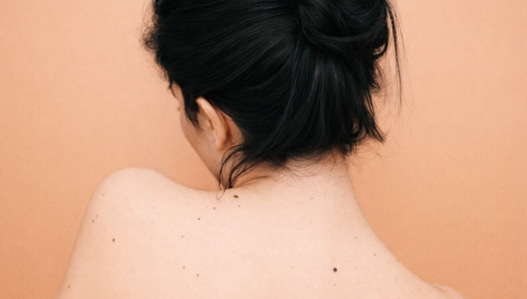
Those small, visible spots that you can see on different parts of your body are called moles (also known as nevi or melanocytic nevi). They are very common skin growths. They were formed when pigment-producing cells in your skin (called melanocytes) grow in clusters instead of spreading out evenly.
Most adults can have from 10 to 40 moles on their body. Some may have fewer, while others naturally have more, especially those who have lighter skin or too much sun exposure.
What Do Moles Usually Look Like?
Moles can look different from person to person, but most of them have a few things in common.
- Colour: They are usually brown, black, or tan, or sometimes even the same colour as your skin.
- Shape: Most moles are round or oval, and have smooth, even edges that make them look quite regular.
- Size: They are often small, just like a size of pencil eraser or even smaller.
- Texture: Some moles are flat, while others can be slightly raised, just like a tiny bump on your skin.
- Hair: It’s normal to have one or two hairs growing on your mole.
- Location: Your moles can appear anywhere in your body, not just in places exposed to the sun.
The good news is that most of the moles you have are harmless and don’t change much over time. They simply stay as they are and don’t cause any issues.
Types of Moles
- Common (acquired) Moles: These are the moles that have been developed over time, usually during your childhood or early adulthood.
- Congenital Moles: These are the moles you’re born with. They have different sizes, from small to large. They also have a high risk of developing into skin cancer later in life, especially if they are large.
- Atypical (dysplastic) Moles: These are different to your regular moles. They appear larger, have uneven borders, or a mixture of colours. While they are not cancerous, you need to monitor them closely because they can develop into melanoma over time.
Read more: The 5 Main Types of Moles You Need to Know About
Effective & professional doctor-led Moles at our central London clinic
The Science of Mole Growth
How Moles Form on the Skin
Usually, your moles form when melanocytes (pigment cells) start to grow in small groups instead of spreading evenly across your skin.
Several factors can influence this process:
- Genetics: Sometimes, it just runs in the family. If your parents have a lot of moles, there’s a big chance that you can have a lot too.
- Sun Exposure (UV Rays): If you are often exposed to the sun, your skin may trigger to produce more pigment, which may lead to the formation of new moles.
- Hormonal Changes: Time like puberty or pregnancy can cause shifts in your body that make your new moles appear or change the existing one slightly.
How Moles Change Over Time
Moles aren’t something that stay exactly the same forever. They naturally change as your body changes. Most people start developing their moles during their childhood and their teenage years. As you get older, or in your adulthood stage, your moles usually settle and stop changing as much.
Over time, it’s completely normal for moles to:
- Get a little darker or lighter
- Grow slightly in size
- Become raised instead of flat
As the years go by, some of your moles may even slowly fade or disappear.
These changes are harmless and simply part of your skin’s natural ageing process.
Can Moles Grow Back After Removal?
Mechanisms of Mole Regrowth
Yes, your moles can grow back after they’ve been removed and it’s actually more common than you may think.
So why does it grow back? The main reason is simple: sometimes, not all the pigment-producing cells are completely removed. When a few of these cells are left behind, they can slowly grow again, causing your mole to reappear in the same spot.
You can think of it like removing a weed. If you didn’t fully take out the roots, there’s a possibility that it will grow back.
Here are some of the most common reasons why this happens:
- Not all the cells were removed: a small number of your mole cells can remain in your skin even if your doctor carefully removed it. Over time, these cells can multiply and form a new one.
- The treatment didn’t go deep enough: If you choose to get removal methods, like shaving, laser treatments, or freezing it may not remove the deeper cells completely because this method focuses more on the surface of your skin. So there’s a chance of regrowth over time.
- Your mole is deeper than expected: Some of your moles may extend on the deeper layer of your skin. These types may be hard to remove completely, which makes them possible to come back.
- The area of removal was kept small: In surgical removal, sometimes, only a narrow area can be taken to minimise scarring. Although this is good, it may occasionally leave behind some cells of your moles..
If your mole grows back, it doesn’t mean that there’s something wrong. In most cases, the regrown mole is still harmless.
Comparison of Removal Techniques and Their Impact
| Technique | Likelihood of Complete Removal/Risk of Regrowth |
| Full surgical excision
(with clear margins) |
Lowest risk – your doctor removes the entire mole along with a small border of your healthy skin. |
| Shave excision/shave removal | Higher risk – your mole is shaved off on the surface level, deeper cells may still remain. |
| Laser/IPL/superficial treatments | Higher risk –targets the top layer of your skin. Deeper pigment cells may survive. |
| Cryotherapy or radiofrequency (superficial) | Moderate risk–your mole could return as it only freezes or burns its surface. |
Identifying Skin Cancer Indicators
Why Skin Cancer Awareness Matters
Most of your moles are harmless. But if you notice that your mole is changing its size, shape, colour, or texture or you have new moles appearing later, you have to closely monitor it as it can be a sign of skin cancer.
The risk factors are:
- You have many moles
- You have fair skin
- You are frequently exposed to the sun
When to Worry About Moles — The ABCDE Rule & Other Warning Signs
Dermatologists often use the ABCDE rule to spot moles that may need further evaluation.
- A–Assymetry: One half of the mole does not match the other half,
- B–Border: It has irregular, scalloped, or poorly defined edges.
- C–Colour: The colour isn’t uniform. It has some shades of brown, tan, black, and sometimes red or white.
- D–Diameter: Usually larger than about 6mm or the size of a pencil eraser.
- E–Evolving: It changes its size, shape, colour, or texture, or if there’s symptoms like itching, pain, or bleeding.
If you closely pay attention to these warning signs, it helps catch potential skin issues early, when they’re easiest to treat.
Monitoring and Aftercare Post-Removal
Signs of Recurrence or Issues to Watch For
After your mole removal, you have to keep an eye on the treated area.
Watch for:
- Pigment returning at the removal site: If you notice that there’s a flat or slightly raised coloured spot again, it could mean your mole is coming back.
- Any changes in appearance: If you notice some changes in its size, shape, colour, or texture, treat it as a new mole and have it checked by your dermatologist.
- Scar tissue consideration: Most scars from mole removal are harmless. But if you see any unusual pigment or growth, have it checked with your doctor.
Best Practices for Skin Health & Mole Monitoring (Post-Removal and Beyond)
- Do your monthly skin checks regularly and note any new or changing spots that you can notice. Also don’t forget to Include those areas that are hard to see.
- Get your annual skin checks with your dermatologist if you have many moles or risk factors, like if you have fair skin, or you have sun damage previously, as well as you have a personal or family history of skin cancer.
- Protect your skin from the exposure of UV rays. Always use your sunscreen, wear protective clothes or a beam hat, and avoid sun’s peak hours. Doing these will help you reduce the formation of a new mole and the risk of skin cancer.
- After your mole removal, follow your doctor’s aftercare instructions, avoid getting the area irritated, and monitor the regrowth of your mole, especially if you choose superficial removal.
Summary & Key Takeaways
Most of the moles are common and they are usually harmless
- They formed when the clusters of pigment-producing cells (melanocytes) group together.
- Some factors can influence the formation of your mole, like your genes, sun exposure, and your body’s hormonal changes.
- Your removed mole can grow back, especially if some cells were left behind.
- The risk of your mole’s regrowth depends on what type of removal you get.
- If you notice any changing or new mole, you should consult your doctor immediately.
- If you have risk factors and you want long-term skin health, use sun protection, check your skin regularly, and get professional screenings when needed.
FAQs
- Can a mole come back after it’s been surgically removed?
Rarely. If the removal is complete with clear margins the regrowth of your mole does not usually occur.
- Why do some moles grow back after laser or shave removal?
Because these methods focus only on your skin’s surface and may leave deeper pigment behind, so it’s possible that your mole will come back.
- If a mole returns, does that mean it’s likely cancerous?
Not usually. Most of the regrown moles are harmless, but if there’s any changes you should have it checked.
- How can I reduce the chance of mole regrowth after removal?
Choose the excision (with margins) method because it can completely remove your moles.
- When should I seek a dermatologist’s help for a changing mole?
If you notice some changes in your mole like in its shape, colour, size, or texture, or if there’s pain, itching, or bleeding, consult your doctor as soon as possible.
Reserve a moles appointment
One of our experts will be more than happy to answer any questions you have.
Book Appointment

Annie Doble
★★★★★
Thank you to Rose! She was the best would recommend her any day!!
25th March 2026

Alex Longson
★★★★★
Dr Waites saw me early, listened and attended to my needs! In all a great experience.
28th March 2026

Monika Sliskova
★★★★★
Great service
25th March 2026